South Indian· No onion-garlic
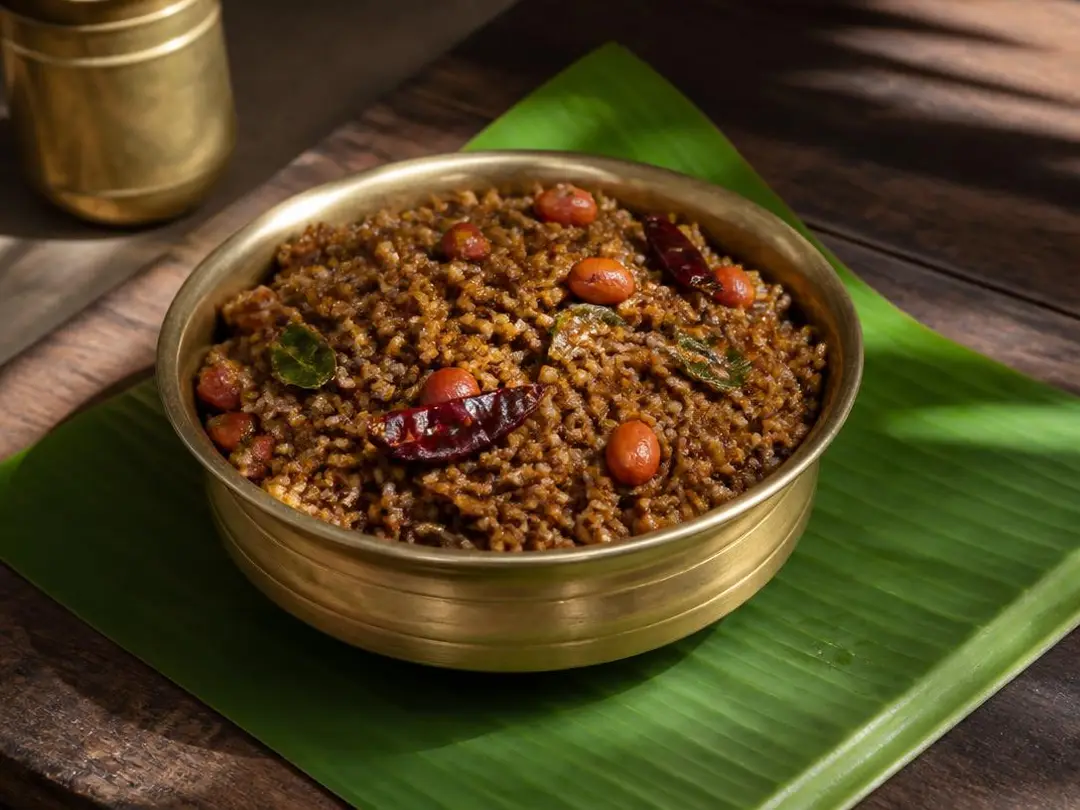
Puliyodarai
- Time
- 25 min
- Level
- Medium
- Base
- 3 servings
Cooking for
3 people
The method
Step by step
Written for first-time cooks — every quantity, timing and cue is spelled out.
- 01
Prepare Rice and Tamarind
First, wash 1 cup of rice thoroughly under running water until the water runs clear. Cook the rice in a saucepan with 2 cups of water and 0.5 tsp salt. Bring to a boil on high heat, then reduce to low, cover with a lid, and cook for 12-15 minutes until all water is absorbed and rice is tender. Once cooked, spread the rice in a large mixing bowl to cool completely, about 30 minutes, so it doesn't become mushy. While rice cooks, soak the lemon-sized ball of tamarind in 1/2 cup (120ml) of hot water in a small bowl for 15 minutes to soften.
- 02
Make Tamarind Pulp
After 15 minutes, mash the softened tamarind with your fingers in the small bowl to extract a thick pulp. Strain this pulp through a fine-mesh sieve into another small bowl, pressing firmly to get as much liquid as possible. Discard the fibrous residue. You should have about 1/2 cup of thick tamarind pulp.
- 03
Roast Sesame Seeds
Heat a small, dry kadhai or wok on medium-low heat. Add 2 tbsp sesame seeds and roast them for 2-3 minutes, stirring constantly with a spatula. They will turn light golden and start to pop slightly, releasing a nutty aroma. Immediately transfer them to a plate to cool. Once cool, grind them into a fine powder using a grinder or blender.
- 04
Prepare Puliyodarai Paste Base
In the same kadhai, heat 2 tbsp gingelly oil on medium heat. Add 3 dry red chillies and 10 curry leaves. Fry for about 30 seconds until the chillies darken slightly and the curry leaves become crisp. Be careful not to burn them. Add the tamarind pulp, 1 tsp salt, 1 tbsp jaggery, and 1/2 tsp turmeric powder. Stir well.
- 05
Simmer the Paste
Bring the mixture to a gentle simmer on medium-low heat. Cook for 8-10 minutes, stirring occasionally. The paste will thicken and darken, and the oil will start to separate and float on top, indicating it's cooked through. This is your puliyodarai paste.
- 06
Temper the Spices and Peanuts
In a separate small kadhai or the same one (cleaned), heat the remaining 2 tbsp gingelly oil on medium heat. Add 1 tsp mustard seeds. Once they splutter (pop rapidly, about 15-20 seconds), add 1 tsp urad dal and 1 tsp chana dal. Fry for 1 minute until the dals turn light golden brown.
- 07
Add Peanuts and Final Seasoning
Next, add 1/4 cup peanuts and the remaining 3-5 dry red chillies (broken into 2-3 pieces if desired) to the tempering. Fry for 2-3 minutes, stirring frequently, until the peanuts are crunchy and light golden brown. Add the remaining 5-10 curry leaves and 1/4 tsp asafoetida. Fry for 30 seconds until the curry leaves are crisp and fragrant.
- 08
Combine Paste and Tempering
Pour this entire tempering mixture, including the oil, directly into the puliyodarai paste in the first kadhai. Stir everything together thoroughly. Add the ground sesame seed powder to the paste and mix well. This is your puliyodarai masala.
- 09
Mix with Rice
Add the cooled, cooked rice to the large mixing bowl containing the puliyodarai masala. Gently fold the masala into the rice using a spatula or your hands (ensure hands are clean and cool). Be careful not to mash the rice; you want each grain to be coated with the flavorful paste. Continue mixing until the rice has a uniform brownish color.
- 10
Rest and Serve
Once mixed, let the puliyodarai rest for at least 30 minutes, or even better, an hour, for the flavors to meld beautifully. This resting period is important for the taste to develop. Serve warm or at room temperature. Enjoy your homemade Puliyodarai!