Punjabi
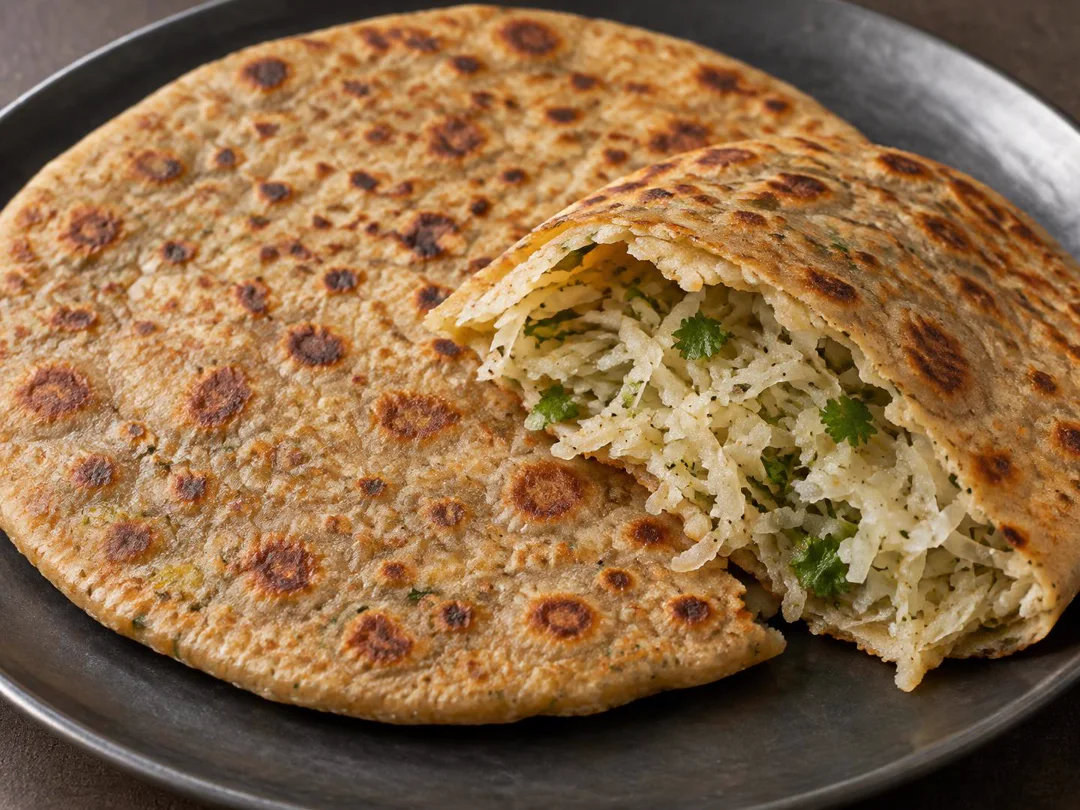
Mooli Paratha
“Use the squeezed radish water to knead the dough — nothing wasted.”
- Time
- 35 min
- Level
- Medium
- Base
- 3 servings
Cooking for
3 people
The method
Step by step
Written for first-time cooks — every quantity, timing and cue is spelled out.
- 01
Set out your tools and ingredients
Before you switch on the gas, keep these ready: chopping board, knife, measuring spoons, measuring cups, mixing bowl, kadhai/wok, flat tawa, rolling pin, grater, stirring spoon/spatula, serving bowl. Wash, peel and chop everything listed above and line the bowls up next to the stove. Indian cooking moves fast once the pan is hot, so having everything within arm's reach is what keeps a first-timer calm.
- 02
Step 1
Grate radish, salt it and rest 10 min, then squeeze out all the water. Work on medium heat unless the step says otherwise, and stir every 20-30 seconds so nothing catches at the bottom. Taste before you move on and adjust salt a pinch at a time.
- 03
Step 2
Mix with chilli, coriander, ajwain and a pinch of amchur. Work on medium heat unless the step says otherwise, and stir every 20-30 seconds so nothing catches at the bottom. Taste before you move on and adjust salt a pinch at a time.
- 04
Step 3
Stuff into rolled atta dough balls and seal well. Work on medium heat unless the step says otherwise, and stir every 20-30 seconds so nothing catches at the bottom. Taste before you move on and adjust salt a pinch at a time.
- 05
Step 4
Roll gently and roast on a tawa with ghee till golden both sides. Work on medium heat unless the step says otherwise, and stir every 20-30 seconds so nothing catches at the bottom. Taste before you move on and adjust salt a pinch at a time.
- 06
Taste, finish and serve
Turn off the heat and taste once more — if it feels flat add a pinch of salt, if it feels heavy add a squeeze of lemon. Use the squeezed radish water to knead the dough — nothing wasted. Serves 3; use the serving selector above to scale every quantity.
Chef's note
Use the squeezed radish water to knead the dough — nothing wasted.