Kerala· No onion-garlic
Appam
- Time
- 20 min
- Level
- Medium
- Base
- 3 servings
Cooking for
3 people
The method
Step by step
Written for first-time cooks — every quantity, timing and cue is spelled out.
- 01
Prepare for Soaking
First, gather all your tools: a large mixing bowl, measuring cups, and spoons. Take 1 cup (200g) of raw rice and rinse it 2-3 times under running water until the water runs clear. Place the rinsed rice in the large mixing bowl and add enough fresh water to cover the rice by about 2 inches (5 cm). Let it soak for at least 4 hours, or up to 6 hours. This makes the rice soft enough to grind easily.
- 02
Activate Yeast
While the rice is soaking, prepare the yeast. In a small mixing bowl, combine 1/2 tsp of active dry yeast with 1 tbsp of sugar. Add 2 tbsp of lukewarm water (not hot, just warm to the touch). Stir gently and let it sit for 5-10 minutes. You'll know the yeast is active when it becomes foamy and bubbly on top, like a small cloud.
- 03
Grind the Batter - First Batch
After the rice has soaked, drain all the water from it. Transfer half of the soaked rice to your blender or mixer grinder. Add 1/4 cup (50g) of cooled cooked rice and 1/2 cup (40g) of fresh grated coconut to the blender. Pour in 1/2 cup (120ml) of thick coconut milk.
- 04
Grind the Batter - Second Batch
Blend the ingredients until you get a very smooth, fine paste. It should feel silky between your fingers without any grainy bits. You might need to add 1-2 tbsp of water if the blender is struggling, but add as little as possible. Transfer this smooth batter to the large mixing bowl. Repeat the grinding process with the remaining half of the soaked rice, adding 1-2 tbsp of water if needed, and add it to the same bowl.
- 05
Combine and Ferment
To the smooth rice and coconut batter in the large mixing bowl, add the activated yeast mixture and 1/2 tsp of salt. Mix everything really well with a spoon or your hand until it's evenly combined. The batter should be thick but pourable, like pancake batter. Cover the bowl loosely with a lid or plastic wrap, leaving a small gap for air.
- 06
Fermentation
Place the covered bowl in a warm spot in your kitchen. Let the batter ferment overnight, or for about 8-12 hours. You'll know it's ready when the batter has doubled in volume, has tiny bubbles on the surface, and smells slightly tangy, like sourdough. If your kitchen is cold, it might take longer.
- 07
Check Batter Consistency
The next morning, gently stir the fermented batter. It should be light and airy. If it feels too thick, you can add 1-2 tbsp of water at a time to get a pouring consistency, similar to thin pancake batter. Do not add too much water, or the appams won't be fluffy.
- 08
Heat Appam Pan
Place your appam pan (appachatti) on a medium flame. Let it heat up for about 2-3 minutes. To check if it's hot enough, sprinkle a few drops of water; they should sizzle and evaporate quickly. Lightly grease the pan with 1/4 tsp of oil using a paper towel or brush.
- 09
Pour and Swirl
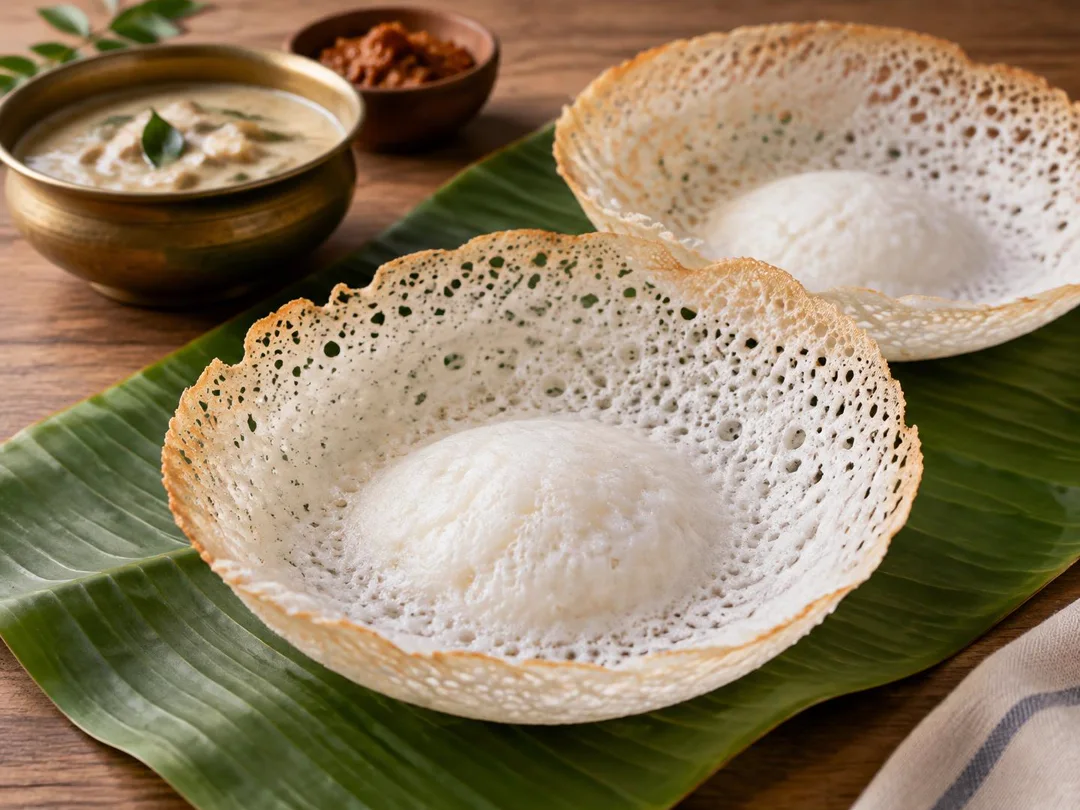
Once the pan is hot, lower the flame to low. Pour one ladleful (about 1/4 cup) of batter into the center of the appam pan. Immediately lift the pan and gently swirl it in a circular motion, so the batter spreads thinly around the edges and forms a thicker center. This creates the lacy edges and soft, fluffy center.
- 10
Cook the Appam
Cover the appam pan with its lid. Cook on a low-medium flame for about 2-3 minutes. You'll know it's done when the edges turn golden brown and crispy, the center is soft and cooked through (no wet batter visible), and steam escapes from under the lid. The appam should easily lift off the pan with a spatula.
- 11
Serve
Carefully remove the cooked appam from the pan using a spatula and place it on a plate. Repeat the process with the remaining batter, lightly greasing the pan with 1/4 tsp oil before each appam if needed. Serve the appams immediately while they are warm and soft. They are best enjoyed fresh.